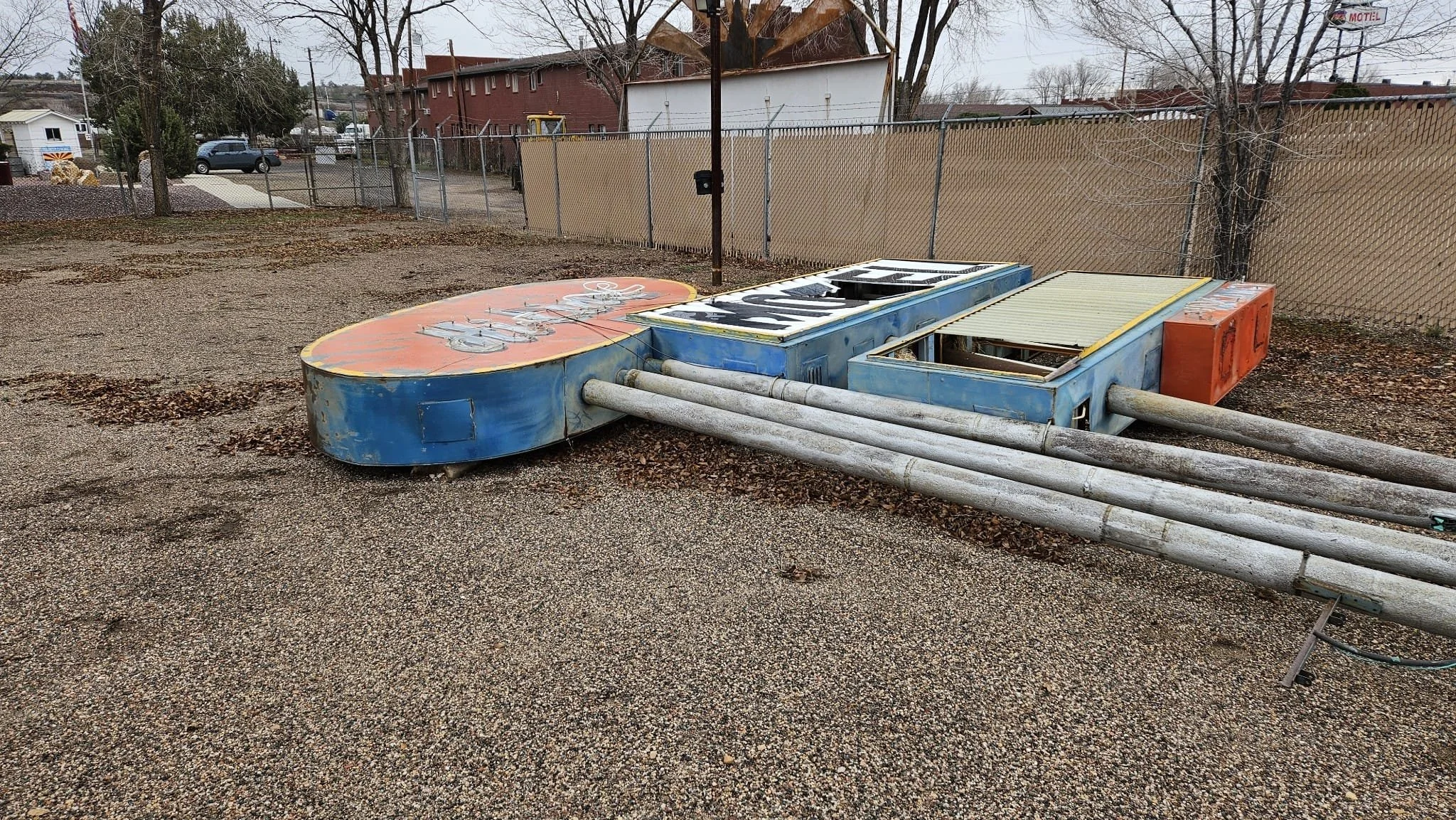
Saving a Piece of Ash Fork History: The Hi-Line Motor Court Sign
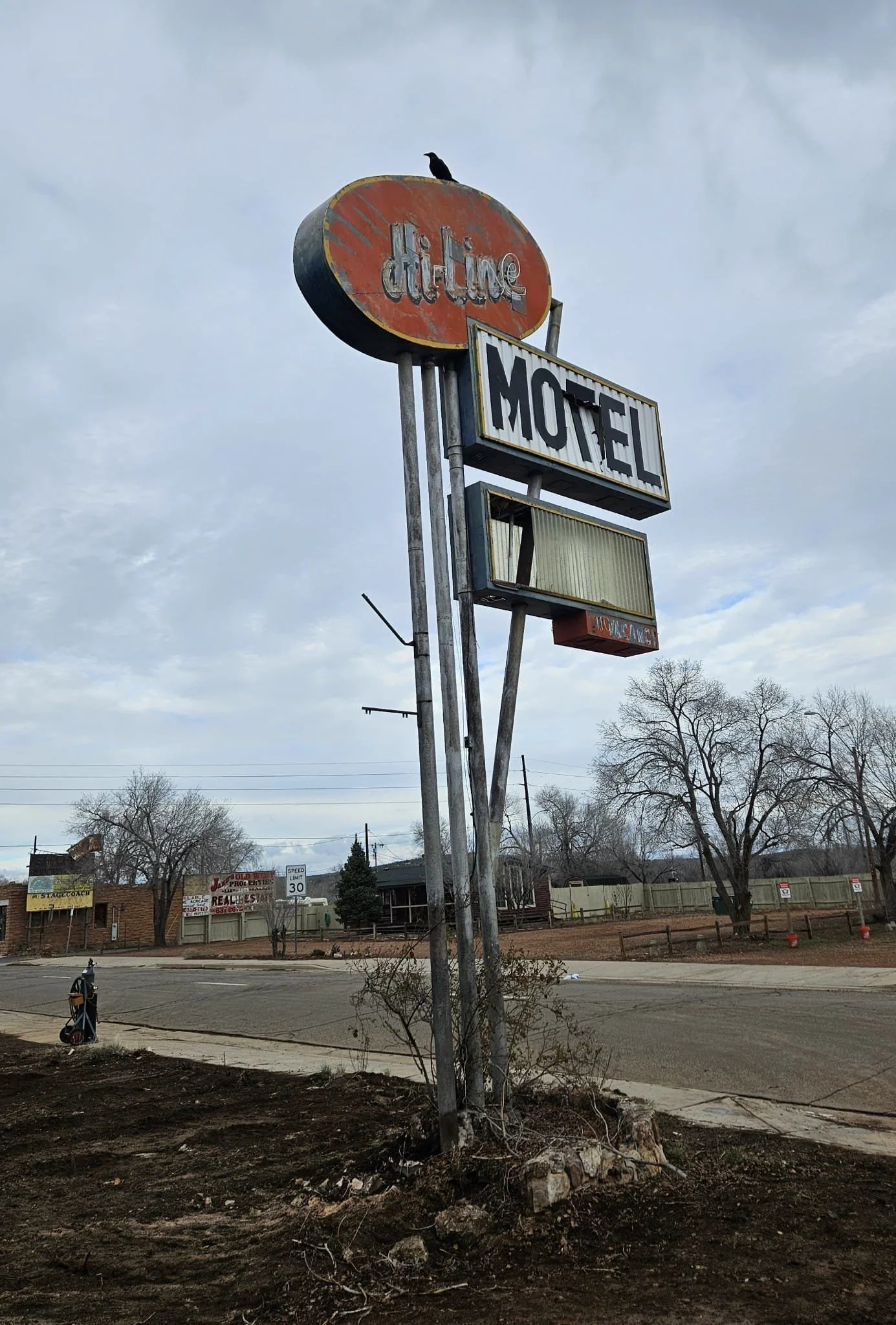
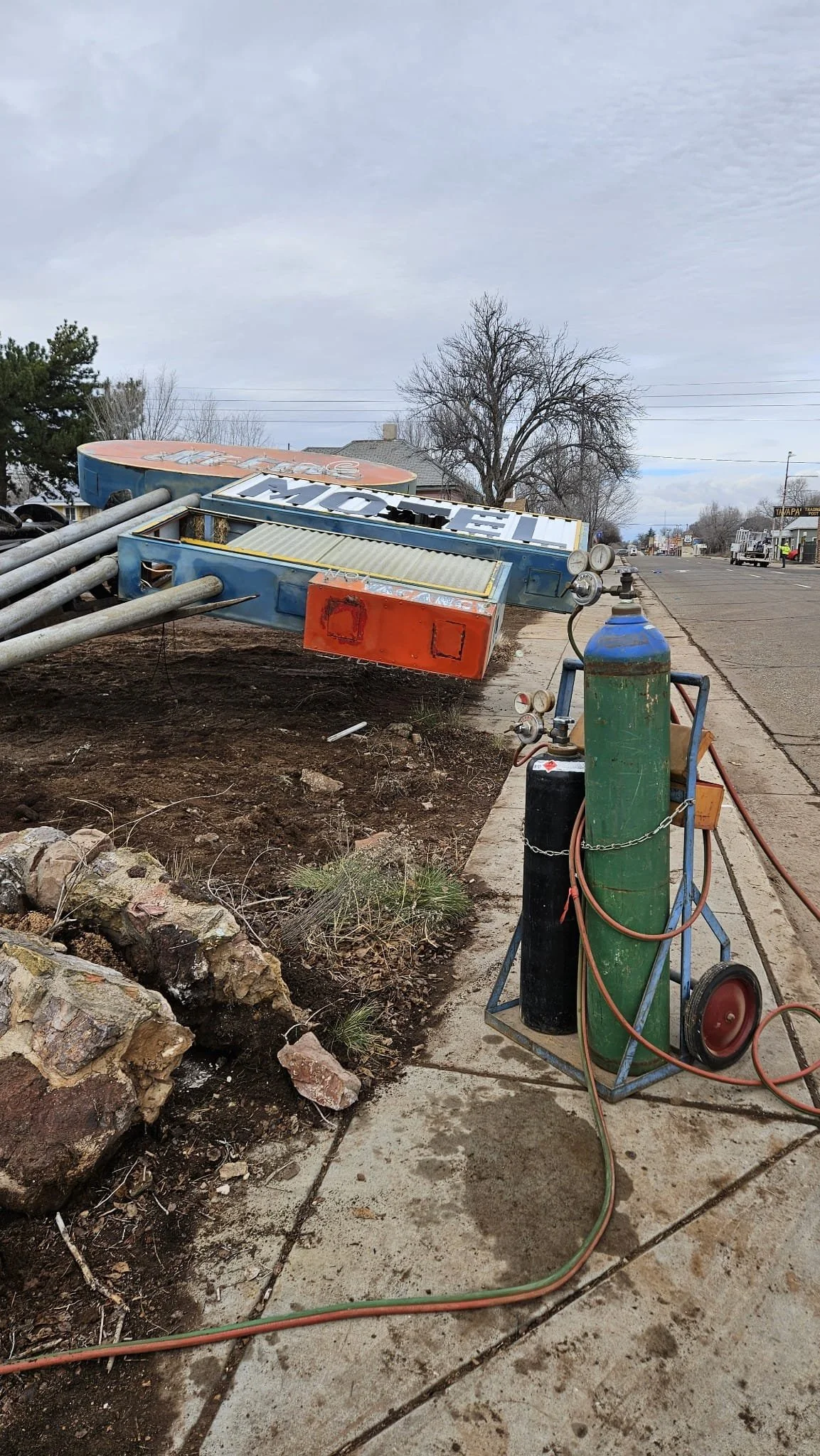
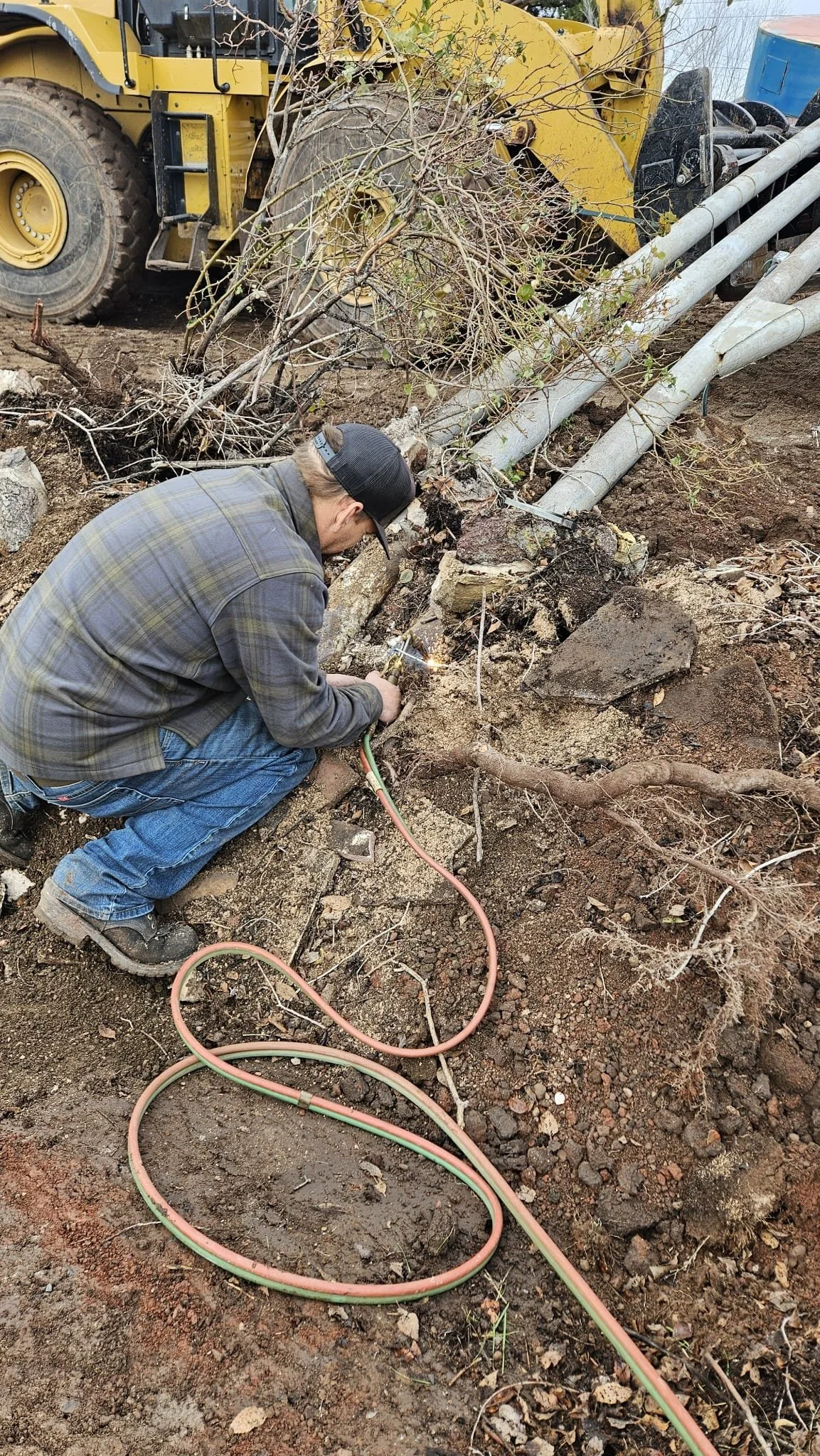
The Ash Fork Historical Museum is proud to share that we were able to salvage the sign from the historic Hi-Line Motor Court, preserving an important piece of our community’s past.
We are currently applying for grants to help fund the restoration and future display of this remarkable sign so that it can once again be appreciated as part of Ash Fork’s local history and Route 66 legacy.
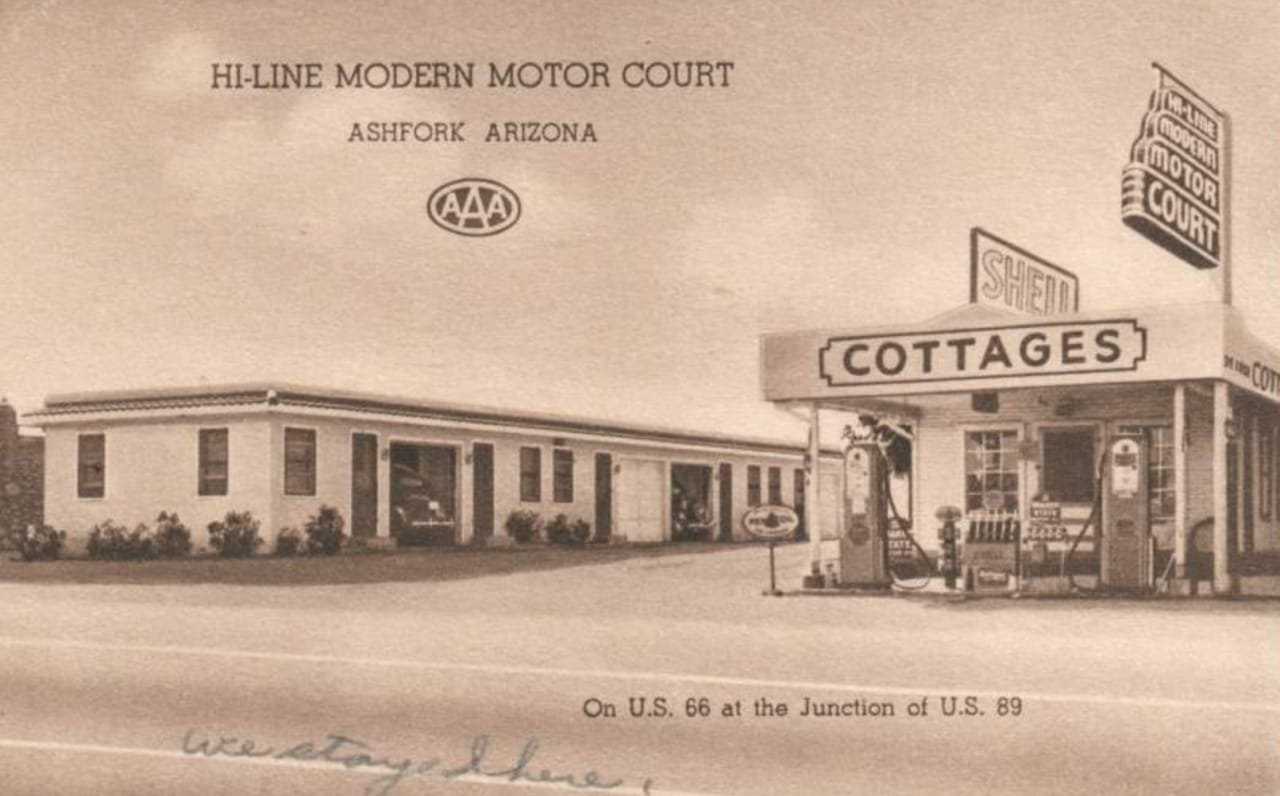
The Hi-Line Motor Court opened in Ash Fork around 1936, founded by a Mr. Moore. Just three years later, it was sold to Mr. and Mrs. J.R. Edwards. In February 1940, the Edwards family expanded the property by adding five new units, each with a kitchenette. At the time, Mr. Edwards reportedly studied the tourist trade carefully and believed there was a real demand for this kind of lodging, reflecting how important highway travel had already become to communities like Ash Fork.
One of the most distinctive features of the Hi-Line was its layout. In the center of the U-shaped motor court stood a Shell station, which later disappeared when the road was widened in the 1950s. In the late 1940s, Jame Alton and Gladys McAbee took over operation of the property and continued running it until 1964. Local historian Marshall Trimble also recalled that, when he was a child, Alton McAbee owned the Hi-Line and served on the school board. He and his wife had three daughters, and their family was part of the fabric of the Ash Fork community.
Unlike many other early motor courts, the Hi-Line survived into the 21st century, though in its later years it was used as long-term rentals. It was especially notable for still retaining its garages, a feature many of its contemporaries had long since lost. After closing in the early 2000s, the property fell into increasing disrepair. In November 2022, it was posted as unsafe for human occupancy, and after years of decline, the county ultimately demolished the building.
Although the Hi-Line Motor Court itself is gone, the salvaged sign gives us the opportunity to preserve and share its story. This sign is more than a relic—it is a visual reminder of the travelers, families, and businesses that shaped Ash Fork during the golden age of roadside travel.
We are hopeful that, through grant funding and community support, we will be able to restore and display the sign for future generations to enjoy. Preserving pieces like this helps keep Ash Fork’s story alive and honors the people and places that made our town such an important stop along Route 66.